The Bell Curve Meme: A Syntropic Analysis

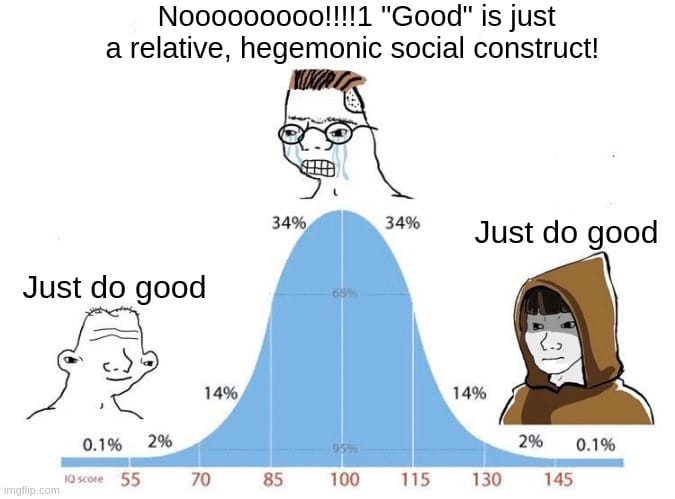
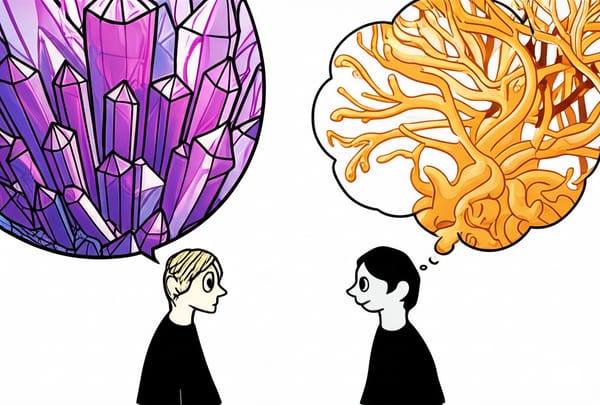
You’ve seen the meme. It’s a bell curve, representing the distribution of intelligence, with three faces along its length. On the far left, a simple-looking fellow offers a plain, direct opinion. In the bulging middle, a smug character (the "midwit") articulates a convoluted, contrarian take. And on the far right, a wise, serene sage offers a conclusion that, paradoxically, sounds almost identical to the simpleton’s.
For example:
- Simpleton: "Just do good."
- Midwit: "Actually, due to the irreconcilable differences between deontological, utilitarian, and virtue ethics, combined with the social construction of 'good' as a hegemonic tool, any naive mandate to action is philosophically untenable."
- Sage: "Just do good."
This meme is more than just a clever jab at pseudo-intellectuals; it’s a brilliant illustration of the journey toward wisdom. It resonates because it taps into a fundamental truth about how systems grow, decay, and achieve true coherence. Using the framework of The Syntropy Lens, we can decode the profound dynamics at play.
The Three Forces: Syntropy, Dystropy, and Decoherence
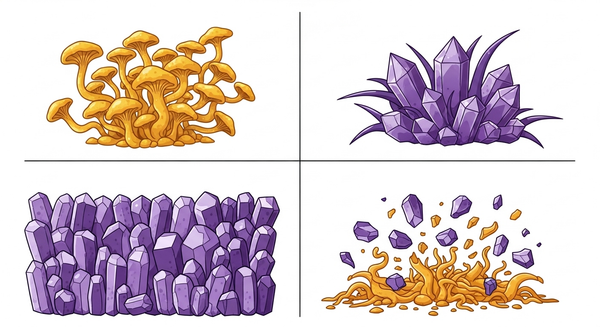
The lens describes three primary forces that govern any system, from a conversation to a civilization. The bell curve meme gives us a perfect avatar for each.
The Simpleton represents a baseline state of low integration, one susceptible to Decoherence. Decoherence is the passive slide toward disorder, the natural tendency for things to fall apart. His unexamined axiom, "just do good," is well-intentioned but brittle. When confronted with a real-world dilemma that challenges this simple rule, it can easily shatter into confusion, as it lacks the deep, integrated foundation to withstand pressure.
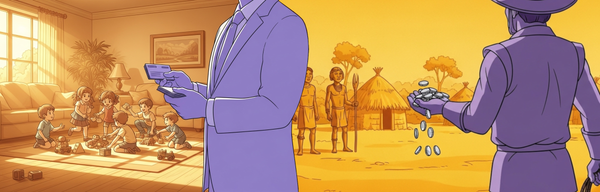
The Midwit is a walking engine of Dystropy. Dystropy isn't chaos; it's an active mimetic parasitism that degrades a system's health. The midwit mimics the form of intelligence without its function. They use jargon, complex logic, and contrarianism not to find truth, but to signal their own cleverness. This parasitic behavior clogs the system with sterile complexity, making it harder for anyone to think clearly or act effectively. It actively reduces the system's integrated information ($Φ$) and leads to paralysis and confusion.
The Sage at the high end is the embodiment of Syntropy. This is the fundamental drive toward increasing integrated information ($Φ$)—that is, toward meaningful, functional complexity. The sage’s simple statement isn't born from ignorance but from mastery. He has wrestled with the midwit’s complex arguments, integrated them with experience and empathy, and distilled them into a simple, powerful, and actionable truth. This is the essence of wisdom: not the accumulation of facts, but their integration into a coherent whole.
The Art of Perception: Calibrating Our Vision
The meme also reveals something crucial about how we perceive the world. The lens calls this faculty Apprehension—a blend of our intellectual, intuitive, and aesthetic abilities to diagnose the health of a system.
The Sage possesses mature $Apprehension$. He can distinguish between healthy growth ($Syntropy$) and its cancerous mimic ($Dystropy$). He sees through the midwit's performative complexity to the simple, underlying vector that truly matters.
The Midwit, in contrast, suffers from what the lens calls Dystropic Mimesis. He is trapped in a co-evolutionary arms race (Red Queen dynamics) of intellectual signaling. His perception is miscalibrated; he mistakes the map for the territory, the jargon for the knowledge, and the signal for the substance. He cannot properly diagnose the system because he is the primary symptom of its illness.
The Path To Integration
Ultimately, the bell curve meme is a map of our own potential development. It teaches us that the path to wisdom does not lie in avoiding complexity, nor in worshipping complexity for its own sake. The goal is to advance meaning.
We may start with the simpleton’s intuitive grasp of the good. But to make that intuition resilient, we must grapple with the midwit’s challenging questions and tangled frameworks. The great error—the dystropic trap—is to get stuck there, mistaking the intellectual struggle for the final destination.
The true aim ($Telos$) is to emerge on the other side, like the sage. It is to integrate that complexity so thoroughly that it becomes simple again, but this time it is a simplicity of profound strength, clarity, and purpose.
The meme is a timeless reminder: watch out for the allure of sterile intellectualism. The next time you find yourself lost in an argument that feels impressively complicated but leads nowhere, you may just be in the middle of the curve. The challenge is to keep moving toward the integrated wisdom that lies on the other side.
What do you think? What should The Syntropy Lens focus on next?