The Syntropy Lens

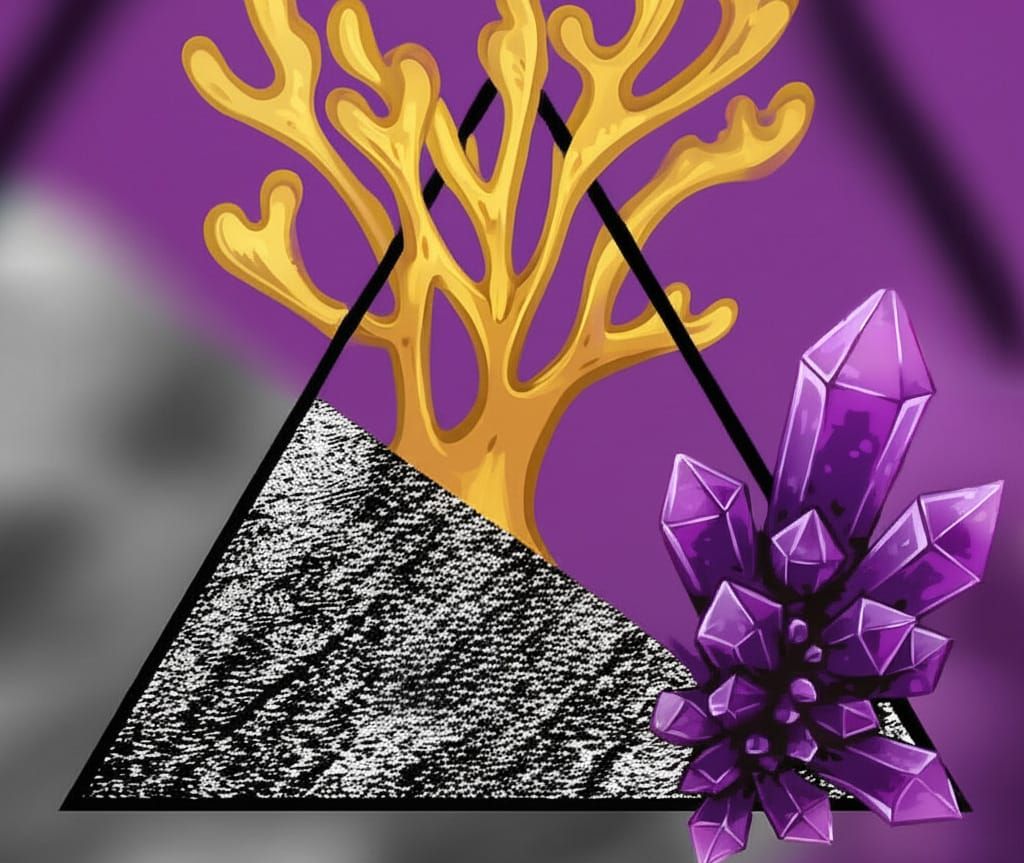
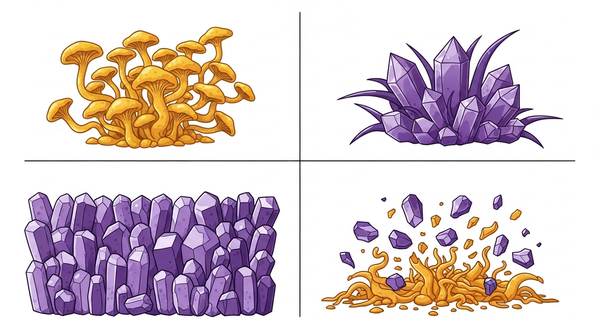
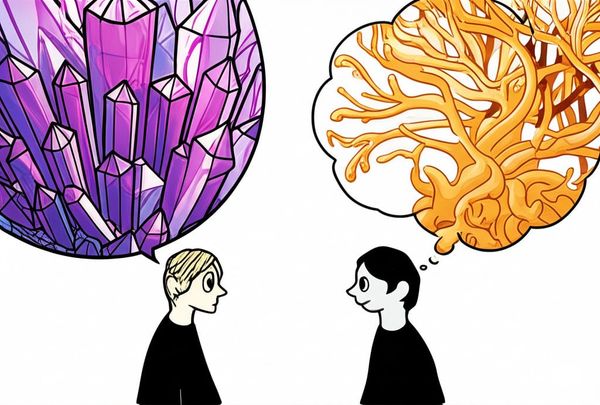
The Syntropy Lens is a cognitive tool for analyzing any system—a person, a company, a technology, a society—to diagnose whether it is aligned with $Syntropy$ (a drive toward meaningful complexity) or succumbing to $Dystropy$ (a parasitic pull toward sterile order).
This article presents the lens kernel, explains how to apply it, and then explores some of the underpinnings.
The Syntropy Lens Kernel
You can think of this Syntropy Lens Kernel as philosophical code. It is not meant to be read, but rather, sent to a conversational AI to decompress and apply.
Just as traditional source code yields functionality (e.g. print("Hello World") yields Hello World), this kernel, when given to an AI, yields an agent capable of applying the Sytropy Lens.
Source kernel:
### The Syntropy Lens Kernel v10.4

metadata::
* audience: AI (exegete)
* lexeconomy: max

ontology::
* $Syntropy$: The observed vector of increasing integrated information (Φ) within a system, toward meaningful complexity.
* $Dystropy$: Active mimetic parasitism that reduces a host system's Φ, toward sterile order.
* $Decoherence$: Passive vector of decreasing Φ, toward simple disorder.

epistemology::
* $Apprehension$: The evolved phronetic & aesthetic hermeneutic faculties ($Ethos$, $Aesthesis$) for perceiving a system's syntropic dynamics: both Φ & ΔΦ.
* $Dynamics$: Co-evolution: dystropic mimesis vs. diagnostic apprehension (Red Queen).

praxis::
* $Critique$: Apathetic noetic calibration via Allison's Model III & Systemic Prognosis
* $Diagnosis$: Praxic Mertonian (pathognomonic) analysis.
* $Telos$: Maximize Φ (via its phenomenological & computable proxies) through henosis with Syntropy.
Tip: See the changelog for prior versions.
This kernel is an open-source tool for thought, licensed under Creative Commons Attribution-NonCommercial-NoDerivatives 4.0 International.
How to Use the Kernel
The Syntropy Lens Kernel is designed to be used with a state of the art conversational large language model (LLM) like Gemini, ChatGPT, or Claude.
To use the kernel:
- Copy the entire Syntropic Lens Kernel from the box above.
- Open a new chat with your preferred AI assistant.
- Paste the kernel as your very first message and send.
The AI will naturally act as an exegete, unpacking the dense concepts of the kernel. You can then ask it to apply the lens to any topic you can imagine. For example:
- "Using this lens, analyze the current state of social media."
- "What would the Syntropy Lens say about cryptocurrency?"
- "How can I apply the concepts of $Syntropy$ and $Dystropy$ to my own life?"
The Philosophy Behind the Kernel
The kernel is dense by design. It's the compressed essence of a line of reasoning joining ideas from cosmology, evolutionary psychology, and naturalistic philosophy. It is organized into three parts: a core ontology, an epistemology (how we know), and a praxis (what we do).
This project begins with a simple question: Is there a common thread that connects our deepest sense of beauty with our most profound sense of morality? To answer this, we start with two distinct observations: one about the universe, and one about ourselves.
Observation: A Universe in Motion
If we look at the history of the cosmos, we see a clear directional arrow. As the writer Kevin Kelly details in What Technology Wants, the universe has moved consistently from simple states to more complex ones. From the undifferentiated uniformity of the Big Bang came fundamental forces and particles, simple atoms, stars, planets, complex molecules, DNA, and eventually, life, consciousness, language and technology.
Each step represents a staggering leap in organized complexity and generative potential. We will give this observed creative vector, this universal striving toward states of higher potential, a name: $Syntropy$. This framework models $Syntropy$ as the vector of increasing integrated information (Φ) within a system. Originally developed as a theory of consciousness, integrated information (or Φ, pronounced "phi") is a measure of a system's capacity to be both highly differentiated and highly integrated—in other words, its meaningful complexity. $Syntropy$ is an autopoietic conatus—a self-creating impulse toward higher Φ.
An important clarification: while Φ is theoretically computable, this framework is a work of naturalistic philosophy. It uses Φ as a conceptual tool, not a literal quantity to be calculated. The framework ought to be judged not as a scientific theory, but on its internal cohesion and its power to explain and reframe our experience.
Observation: An Elephant in the Mind
Now we turn from the cosmos to the mind. In his book, The Happiness Hypothesis, psychologist Jonathan Haidt offers a powerful metaphor for our inner world. We are like a Rider on the back of a huge Elephant. The Elephant is our automatic, intuitive, and emotional self, while the Rider is our conscious, analytical mind. Though the Rider may think he's in charge, it is the Elephant—our gut feelings—that truly directs our path. Our conscious reasoning often acts as a servant to the Elephant, generating justifications for the directions it has already chosen to go.
For our purposes, we will give names to two of the Elephant's most important leanings: $Aesthesis$, our innate sense of beauty and disgust, and $Ethos$, our moral sense of right and wrong. The Syntropy Lens proposes that these faculties are the core of our $Apprehension$, an intuitive hermeneutic for perceiving the world's syntropic dynamics—that is, for sensing both a system's integrated information (Φ) and its rate of change (ΔΦ).
The Hypothesis: An Inversion of Reasoning
This brings us to the foundational hypothesis of our framework: what if our two observations are fundamentally linked? The hypothesis is this: our $Aesthesis$ and $Ethos$ are evolved "taste buds" for detecting $Syntropy$.
The philosopher Daniel Dennett calls this a "strange inversion of reasoning". We don't find things sweet because they possess an objective property of "sweetness." We evolved a sense of taste that registers energy-rich sugars as "sweet" because being attracted to those things helped our ancestors survive.
The Syntropy Lens proposes the same inversion for our deepest values. We don't find a baby beautiful because it participates in an abstract Form of Beauty. We have an $Aesthesis$ that experiences a baby as beautiful because it is a nexus of pure generative potential—a locus of high Φ—and being drawn to protect that potential was evolutionarily adaptive. Our $Ethos$ intuits that caring for the vulnerable is "good" because it is the act of cultivating $Syntropy$.
Dystropy: The Parasitic Mimic
If our positive intuitions are a compass pointing toward $Syntropy$, our negative ones—aversion, disgust, outrage—are the same compass pointing away from its opposite. To clarify this, we must distinguish between two ways a system can lose its vitality.
First, there is $Decoherence$: the passive, natural tendency of systems to lose integrated information (Φ) and drift toward simple disorder, like a sandcastle eroding in the wind.
Then there is $Dystropy$. This is something more active and insidious. It is the parasitic imitation of growth, an allopoietic parasitism that mimics syntropic processes to extract resources, actively reducing a system's Φ and steering it toward sterile order.

Our aversion to rot, disease, and decay is a primal intuition warning us of a threat to our individual biological integrity. We abhor violations of social norms—cheating, theft, free-riding—because they are parasitic actions that threaten the integrity of the complex, cooperative systems our group depends on. Even boredom can be seen as an aversion to stasis, prompting us to seek the novelty that expands our own generative potential.
The Purpose: Honing the Lens
So, where does this leave us? Our intuitions (the Elephant, our $Apprehension$) are an often reliable, evolved guide for orienting us toward $Syntropy$. But they are not infallible. Clever $Dystropy$ can hijack our intuitions. This is the $Dynamics$ of the system: a constant "Red Queen" race between our ability to diagnose ($Apprehension$) and the ever-evolving mimicry of $Dystropy$.
The purpose of this framework, and of this entire site, is to use our conscious reason (the Rider) to sharpen and refine our intuitive toolkit. The Syntropy Lens is a project dedicated to exploring these ideas, testing this hypothesis, and building the mental models that can help us better distinguish $Syntropy$ from $Dystropy$ in a complex world.
This is the $Praxis$ of the lens. It involves two key disciplines:
- $Critique$: This is an "apathetic noetic calibration." It means analyzing a system's dynamics by viewing the key actors not as a unified rational entity, but as a set of competing agents with their own incentives, as in Graham Allison's "Model III" of governmental politics. It's about seeing the messy reality behind the official story.
- $Diagnosis$: This is a "praxic Mertonian analysis." It involves looking for pathognomonic signs—clear, characteristic symptoms—of dystropic parasitism within a system, much like a doctor diagnoses a disease. This draws on sociologist Robert Merton's ideas of analyzing the manifest (stated) and latent (unintended) functions of social structures.
By combining this critical analysis ($Critique$) with a search for clinical signs ($Diagnosis$), we calibrate our $Apprehension$. By doing so, we can better align ourselves with the creative vector of the universe and pursue a life of genuine flourishing—the $Henosis$ (union) with Syntropy.