Anton Ego's Syntropic Shift in Ratatouille

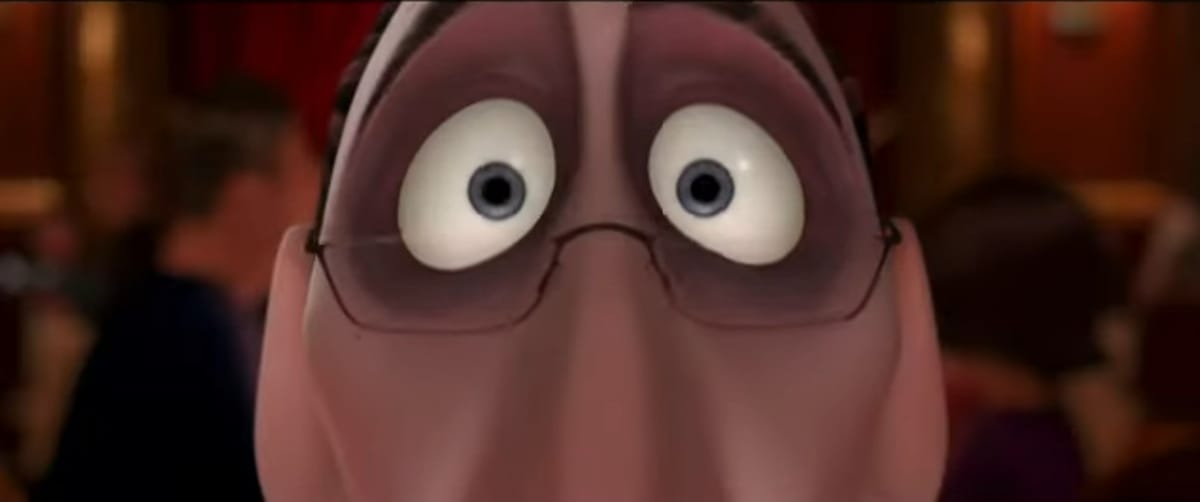
In the realm of cinema, few characters embody a more dramatic transformation than Anton Ego, the notoriously acerbic food critic from Disney Pixar's Ratatouille.
Through The Syntropy Lens, a framework that examines the movement of systems toward increasing integrated information ($\Phi$) and meaningful complexity, Ego's journey offers a compelling narrative of how even the most entrenched dystropic forces can be reoriented towards creative appreciation.
The Reign of Dystropy: Ego as Culinary Parasite
At the outset, Anton Ego stands as a potent agent of Dystropy. His power lies not in creation, but in critique – a "mimetic parasitism" that feeds on the efforts of others. His scathing reviews possess the ability to dismantle restaurants and shatter culinary dreams, effectively reducing the $\Phi$ of the gastronomic ecosystem he surveys. This relentless negativity pushes the vibrant and complex world of haute cuisine toward a state of "sterile order," stifling innovation and passion under the weight of his judgment.
Ego's very persona reinforces this dystropic role. His coffin-shaped office and severe demeanor serve as stark visual metaphors for his life-draining influence. He represents a system resistant to novelty, ossified in its cynicism and incapable of embracing growth.
A Syntropic Revelation: The Taste That Transcends
The pivotal moment arrives with a simple dish: Remy's ratatouille. This single taste triggers a profound act of Apprehension, engaging Ego's evolved capacity to perceive syntropic dynamics. The Syntropy Lens posits that we possess inherent faculties ($Ethos$ and $Aesthesis$) for recognizing the movement toward meaningful complexity. For Ego, these faculties, dulled by years of critical detachment, are suddenly awakened.
The ratatouille itself is a concentrated burst of Syntropy, a dish brimming with integrated information. It's not merely cooked vegetables; it's a harmonious symphony of flavors and textures, imbued with a depth of care and ingenuity that resonates deeply with Ego. The experience transcends mere gustation, unlocking a flood of childhood memories and a profound understanding of the love and passion embedded within the dish. This encounter generates a significant "ΔΦ," a shift in integrated information that begins to dismantle his dystropic framework.
From Cynicism to Creation: Embracing a Syntropic Telos
In the aftermath of this culinary epiphany, Ego undergoes a remarkable transformation, shifting from detached Diagnosis to embracing a new Telos, a purpose aligned with Syntropy.
His subsequent review marks a powerful turning point. He introspectively acknowledges his former parasitic existence: "In many ways, the work of a critic is easy. We risk very little, yet enjoy a position over those who offer up their work and their selves to our judgment." This is a clear-eyed assessment of his past dystropic influence.
He then champions the very essence of Syntropy: the emergence of the new and the unexpected. Risking his hard-won reputation, he defends the extraordinary talent he discovered in the most unlikely of places, declaring that "a great artist can come from anywhere." His new Telos becomes the recognition and cultivation of meaningful complexity ($\Phi$), regardless of its origin.
Ego's final act of investing in Gusteau's new bistro solidifies his syntropic shift. He transitions from an external critic to an integral part of a smaller, more dynamic, and ultimately more syntropic system. He achieves a form of "henosis with Syntropy," aligning himself with the creative and life-affirming forces he once sought to suppress.
Anton Ego's journey in Ratatouille serves as a potent illustration of the Syntropy Lens in action. It demonstrates how a direct encounter with profound meaningful complexity can dismantle even the most hardened dystropic perspectives, paving the way for appreciation, growth, and a renewed alignment with the inherent drive toward creative flourishing.
What do you think? What should The Syntropy Lens focus on next?